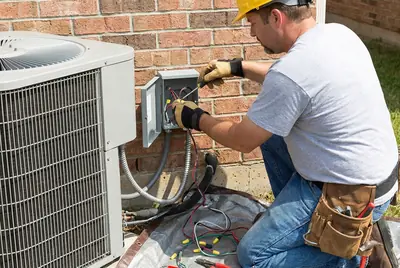
Mini Split Installation

Mini Split Installation in Kimble County, Texas (TX)

All across Kimble County, we hang ductless systems that heat, cool and hold their charge for the long haul.

Call (844) 609-4116

The call commits you to nothing. Any service-call or trip fee for an on-site visit is named when the date is set, and the written figure follows the visit.

500 micronsthe vacuum reading we hold before refrigerant moves
1 outdoor unitquietly feeding as many as eight indoor heads
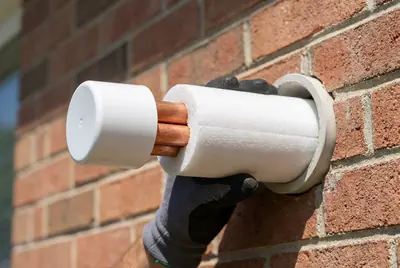
3 inchesthe only hole your wall gives up to a lineset
-13 F outsidewhere a proper cold climate unit is still heating

Efficient climate control systems in Kimble County

Getting a ductless air conditioning and heating unit installed requires a professional who understands the specific thermal needs of the Texas hill country. These versatile wall-mounted systems provide localized temperature regulation by connecting an interior air handler to an outside compressor through a narrow conduit. This simple setup eliminates energy loss typically found in traditional forced-air setups which saves you money on utility bills.

Moreover, these sleek devices allow you to manage individual zones inside your house without cooling rooms that stay empty all day long. Because they operate without bulky ductwork, you avoid the common headache of leaky vents hidden in your walls or attic spaces. That design feature keeps dust and allergens from circulating through your living spaces, which means you can breathe much cleaner air every single day.

Choosing the right setup for your home

Selecting the proper unit size matters because a machine that is too small works too hard while an oversized one cycles on and off constantly. This constant cycling wears down internal components faster, whereas a perfectly sized unit keeps your indoor atmosphere steady and peaceful. You should look for a licensed installer who calculates the specific heating and cooling load for your square footage.

Additionally, these compact systems run at extremely low decibel levels, making them perfect for bedrooms or quiet home offices. Since they operate so quietly, you might forget they are even running until you feel the change in temperature. That silence adds a sense of serene living to your daily routine while keeping every corner of your property at your preferred temperature.

Key features to consider

Feature Primary Benefit
Inverter technology Smooth and steady operation
Multi-zone capability Total control over room temperature
Remote access Adjust settings from anywhere

Integrating inverter technology means the motor adjusts its speed based on what your room actually needs rather than just turning off and on. This nuanced approach prevents wild temperature swings, which helps you stay perfectly balanced during those intense Texas summers. You get a consistent flow of air that never feels like a sudden blast of arctic wind or a wave of stagnant heat.

Furthermore, checking for a unit with high seasonal energy efficiency ratings helps you keep long-term costs lower. A skilled technician who knows the local building code ensures that your unit sits in the optimal spot to maximize airflow. That precision placement lets you enjoy optimal thermal distribution without having to move furniture or block pathways around your home.

Ensuring professional quality standards

Verifying that your installer holds proper liability insurance protects your property throughout the entire process of mounting the indoor units and piping the refrigerant lines. A crew that understands how to properly seal wall penetrations prevents moisture issues from developing over time. Such attention to detail is the hallmark of high-quality workmanship and keeps your walls dry and intact.

Also, always ask for a written warranty to understand what protections exist for both the equipment and the labor provided. Having a clear agreement in place gives you peace of mind that any mechanical hiccups get addressed by the person who performed the original setup. This is a smart investment in your property that yields returns through years of reliable performance.

Taking the next step

Navigating the installation of a new ductless heat pump requires planning and the right hands to get the job done right. You want a pro who shows up on time and respects the layout of your home while drilling the necessary holes for your conduit. Once you have a clear plan, the actual process happens quickly and leaves you with a modern solution for year-round temperature management.

Ready to upgrade your home comfort levels and stop fighting with inefficient window units or outdated central air? Simply provide the details of your project today to get a quote from a local professional serving this area. That quick action moves you toward a cooler and more efficient living space without any of the usual stress or guesswork.


Size it, mount it, commission it

Three stages, and no shortcuts hiding between them. Most of this work is invisible from the couch, so here it is in plain words.

Size it: mini split installation stage

Stage 1

Size it

Every quote starts with arithmetic, not a catalog. We walk the rooms, note sun, insulation and ceiling height, and land on a capacity for each head. An oversized unit short cycles and never wrings the humidity out; an undersized one runs flat out and still loses the argument in August. The number has to be right before anything touches a wall.

Mount it: mini split installation stage

Stage 2

Mount it

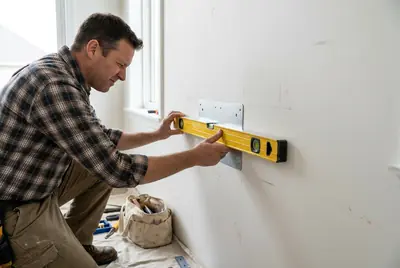
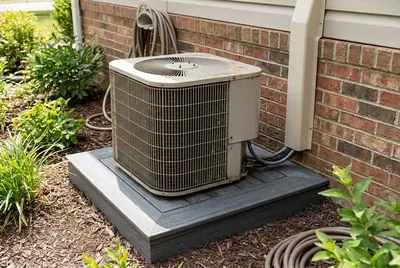
The indoor plate goes on studs or proper anchors, leveled twice, high enough to throw air across the room instead of down your neck. Outside, the condenser sits on a pad or stand-offs with clearance to breathe. The two meet through one small sleeved hole, pitched slightly outward so condensate drains away from the house instead of into it.

Commission it: mini split installation stage

Stage 3

Commission it

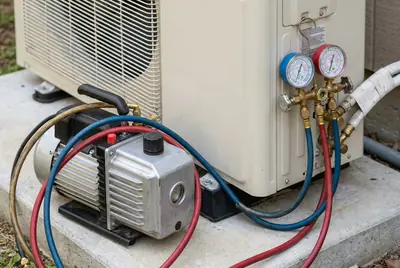
Flare joints are torqued to the value stamped in the manual, then the lineset is pressure tested and pulled down to a deep vacuum. Only when the gauge holds do we release refrigerant, and only in the weighed amount the run length calls for. Then we run it hot, run it cold, and show you both before packing the van.

One zone or multi zone

The honest answer changes house by house. Here is the trade in one table, including the case nobody advertises: two singles sometimes beat one multi.

The questionSingle zoneMulti zone
What hangs outsideOne compact condenser for one room
Refrigerant runsA single short lineset, simple and cheap to route
If a compressor failsThat room loses comfort, the rest of the house never notices
Running two roomsTwo singles can be cheaper than one multi and fail separately
Efficiency habitsTuned for its one room, sips power at part load
Adding on laterJust buy another single when the addition is built

When two rooms sit at opposite ends of the house, quoting two singles against one multi takes us ten extra minutes and often saves you real money. We price both and let the arithmetic pick.

The work you are actually paying for

Wall plates set level

Wall plates set level

Anchored into framing, checked with a level twice, because a head that tilts drips condensate down your paint.

Linesets flared by hand

Linesets flared by hand

Copper cut square, deburred, flared and torqued to spec. The joint you never see again is the one we fuss over most.

Condensers that can breathe

Condensers that can breathe

Pad or stand-offs, snow legs where winter asks, and clearance on every side so the fan is not chewing its own exhaust.

Vacuum pulled, then proven

Vacuum pulled, then proven

The pump runs until the gauge reads deep and stays there with the pump off. Moisture never gets a seat in the circuit.

A circuit of its own

A circuit of its own

Dedicated breaker, correctly sized wire, outdoor disconnect within sight of the unit. Wired to code, not to convenience.

Handover with the remote

Handover with the remote

Modes, schedules, filter care and the one habit that saves power: set it and leave it. Ten minutes that pay for years.

Why the vacuum pump matters

Between the copper being opened to the air and the refrigerant being released, the lineset holds ordinary room air, and room air always carries water. Water is the one passenger a refrigeration circuit cannot forgive. Mixed with refrigerant and oil it forms acids that eat the compressor from the inside, quietly, over two or three summers, long after the installer's van has left the street.

The cure is not a gadget, it is patience. A vacuum pump pulls the lines down until the air, and more stubbornly the moisture clinging to the pipe walls, has boiled away. We watch the gauge fall, valve the pump off, and wait. If the reading creeps back up, something is still wet or something leaks, and either way the system is not ready. Skipping that wait saves half an hour on install day and costs a compressor five years on.

Charge is the same discipline in a different unit. Refrigerant is not poured to a feeling; the correct amount depends on the length of the run and is measured on a scale, gram by gram. Too little and the system strains on cold mornings. Too much and pressures climb while efficiency slides. The scale and the gauge are cheap instruments, which is exactly why we trust installs that use them and doubt the ones that do not.

From first call to first cool evening

  1. Call the bench

    One call to (844) 609-4116: ZIP, the rooms giving you trouble and a word about the walls. Half a minute, and the clock starts.

  2. The installer listens

    On that same call an installer, not a script, asks about walls, panel capacity and which rooms misbehave in which season.

  3. The walkthrough

    We measure the rooms, find the head positions and the condenser spot, and leave you a written figure that holds.

  4. Install day

    Bracket, hole, lineset, wiring, vacuum, charge. A single zone is usually running by that afternoon.

  5. Both seasons proven

    Before we go, the system heats and cools on command in front of you, and the paperwork lands in your hand.

What sets the price of an install

The lineWhat it covers
Single zone, wall mounted, installed and commissionedHead, condenser, bracket, lineset, vacuum, charge and startup.
Each additional zone on a multi systemAnother head, its lineset and the commissioning that goes with it.
Dedicated circuit and outdoor disconnectBreaker, wire run and disconnect, priced with your panel in mind.
Condenser on wall stand-offs instead of a ground padWorth it where snow drifts, floods or lot lines argue with a pad.
Removing old window units and closing the openingsHaul away included; your windows seal and lock again.

Lineset length, wall construction and your electrical panel move the figure, which is why the on-site visit comes before the written quote.

The finish is part of the engineering

A mini split earns its keep for fifteen years, so the half day it takes to fit one should not leave scars. The wall penetration is drilled once, sleeved, pitched and sealed against weather and insects, with a drop cloth under it and a vacuum run over the dust before we straighten the furniture. Outside, the lineset does not dangle down your siding like forgotten cable: it travels inside a slim cover, run plumb and square, in a shade that sits quietly against the house.

Commissioning ends with a demonstration, not a wave from the driveway. You watch the system pull the room down in cooling, then flip to heating and feel the coil come up warm. Condensate gets a poured glass of water through the drain line while you watch it exit where it should. If any of that misbehaves in the first season, the crew that installed it returns under the workmanship terms printed on your quote, and the visit costs conversation, not money.

Questions we field at kitchen tables

What size does my room actually need?

Rough arithmetic says 20 to 30 BTU per square foot, but sun, insulation, ceiling height and how many bodies use the room all bend that number. The walkthrough pins it down per room. Bigger is not safer: an oversized head cycles instead of dehumidifying, and the room feels clammy at the right temperature.

Can one system heat and cool the whole house?

A multi zone with three to five well placed heads covers most single family layouts, and hallways borrow from the rooms around them. Very large or very chopped up houses sometimes do better with two smaller systems on opposite ends, which we will say plainly when the math points that way.

Do mini splits really heat in winter?

Cold climate models hold useful output far below zero, and the walkthrough checks your design temperature before we promise anything. In the harshest snaps a fireplace or baseboard backup earns its keep, the same way it would beside any heat pump.

How invasive is the installation?

One sleeved hole about three inches wide per indoor head, a bracket on studs, and a lineset cover outside. No ducts, no ceilings opened, no plaster repair. A single zone that starts at breakfast is usually cooling by mid afternoon.

Will my electrical panel need work?

Each system wants its own circuit and an outdoor disconnect. Panels with a free slot take that in stride; crowded ones may need a tandem breaker or, rarely, an upgrade. We look at the panel during the walkthrough so the quote already contains the answer.

Where on the wall should the head go?

High, on a wall that lets the air wash the length of the room, away from bed headboards and door swings, with a clean drain path outside. Placement is comfort engineering, not decoration, and it is decided standing in the room with you.

The streets around Kimble County

Every link below is a place our installers already know by its walls and winters. The map sets the scene.

Room by room comfort across Kimble County

Our install vans elsewhere in Texas

Somewhere in the house there is a room nobody sits in. Give it a head and a remote.

Call (844) 609-4116