Mini Split Installation

Mini Split Installation in the United States (USA)

A ductless heat pump gives the rooms that struggle their own quiet head and their own remote, without disturbing the rest of the house. We do the sizing, the bracket, the vacuum and the proof.

  • Sized to each room, never to a brochure
  • Deep vacuum and a weighed charge, every system
  • Warm in January, cool in July, one written price
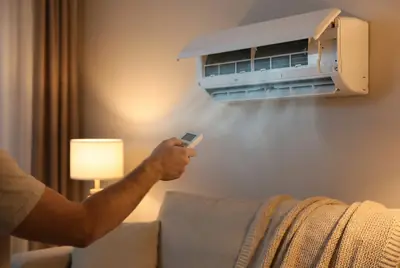
Wall mounted mini split head running above a living room window

Plan my install

Five fields now, a written figure once we have seen the walls. Nothing in between.

Free, in writing, and yours to keep whatever you decide. One call from the installer, then quiet.

500 micronsthe vacuum reading we hold before refrigerant moves
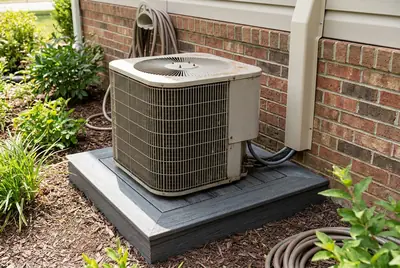
1 outdoor unitquietly feeding as many as eight indoor heads
3 inchesthe only hole your wall gives up to a lineset
-13 F outsidewhere a proper cold climate unit is still heating

Beating the Heat and Cold Across the Country

Most folks living in this giant North American nation struggle with crazy temperatures every single year. Fortunately, you can fix your indoor climate by calling a local crew to set up a sleek multi-zone thermal unit. This setup lets you enjoy total thermal luxury in every single room without spending a fortune.

Today we will check out how getting a mini split installation makes your home much cozier. Meanwhile, keeping your bills low brings major peace of mind.

Why Your Home Needs Climate Control Upgrades

Saying Goodbye to Drafty Rooms

Old HVAC systems usually leave certain bedrooms freezing while others stay boiling hot. However, upgrading your gear fixes that annoying problem right away. This clever machinery sends conditioned air directly where you want it. Therefore, your living room stays cozy while your kitchen remains cool during summer cooking sessions.

Saving Cash on Monthly Utility Bills

Energy costs keep climbing higher across the nation with three hundred thirty five million residents. Yet modern inverter compressors use barely any juice compared to ancient window shakers. Consequently, your monthly electric bill drops dramatically over the first season. That extra cash stays right inside your pocket for weekend getaways.

Understanding the Setup Process

What Happens During the Visit

When the truck pulls up your driveway, friendly technicians get straight to work. First, they measure your rooms to find the exact size you need. Then, drilling a tiny hole through the wall connects the outdoor condenser to indoor blowers. This means minimal disruption to your daily routine while they work.

Looking at what to expect can ease any worries you might feel right now. Let us check out this quick breakdown showing typical equipment parts.

Equipment Part Main Purpose Your Benefit
Outdoor Compressor Releases unwanted heat outside Quiet operation
Indoor Air Handler Blows conditioned air softly Even room temperatures
Refrigerant Lines Transfers thermal energy smoothly Maximum energy efficiency

Every single component works together to give you ultimate indoor ease. Ultimately, trusting professionals prevents costly mistakes during setup.

Choosing Local Pros for Your Project

Finding Reliable Help Near You

Hiring dependable tradespeople in the US ensures your gear runs properly for decades. Local contractors know local weather patterns inside and out. Plus, they arrive quickly if you ever need maintenance down the road. This guarantees you get prompt service whenever unexpected issues pop up.

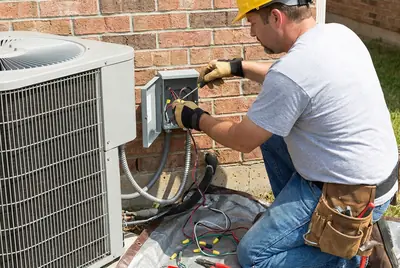
Working with experienced technicians takes all the stress off your shoulders. They handle permits and wiring safely without bothering you. Meanwhile, you can sit back and relax while they transform your space.

Financial Considerations and Estimates

Getting the Best Value for Your Money

Investing in new climate control gear requires careful budgeting beforehand. Thankfully, reputable contractors offer transparent pricing with zero hidden fees. You deserve to know exact costs before anyone starts drilling holes. That is why requesting a free estimate helps you plan smartly.

Across the United States, median household income varies quite a bit depending on your specific ZIP code. Because of this financial diversity, flexible payment plans make upgrading accessible for everyone. On top of that, local utility companies often provide juicy rebates for energy-efficient upgrades.

Maintaining Your Thermal Units

Simple DIY Maintenance Tips

Keeping your indoor units clean ensures they blow fresh air all year long. Fortunately, washing the plastic filters takes only five minutes of your time. Doing this monthly prevents dust buildup and keeps airflow strong. As a result, your equipment lives a much longer and happier life.

Checking the outdoor unit for fallen leaves matters just as much as indoor care. Whenever branches block airflow, the system works harder than necessary. Clearing debris away lets your machine breathe freely without wasting electricity. That simple habit saves you from expensive repair bills later on.

Making the Final Decision

Taking Action Today

Living through extreme weather without proper climate control drains your patience fast. Fortunately, upgrading your indoor comfort is only a phone call away. You can request a free quote right now by reaching out to local pros. Stop suffering through sweating summers and freezing winters starting today.

Taking this important step improves your daily living standards permanently. Your family deserves a cozy environment no matter what the thermometer reads outside. Therefore, contact your neighborhood specialists and schedule your consultation right away.

Size it, mount it, commission it

Three stages, and no shortcuts hiding between them. Most of this work is invisible from the couch, so here it is in plain words.

Size it: mini split installation stage

Stage 1

Size it

Every quote starts with arithmetic, not a catalog. We walk the rooms, note sun, insulation and ceiling height, and land on a capacity for each head. An oversized unit short cycles and never wrings the humidity out; an undersized one runs flat out and still loses the argument in August. The number has to be right before anything touches a wall.

Mount it: mini split installation stage

Stage 2

Mount it

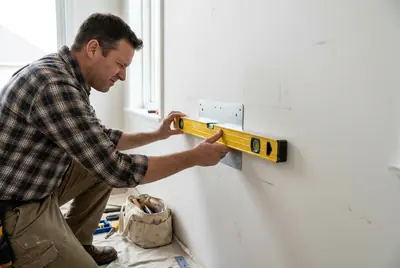
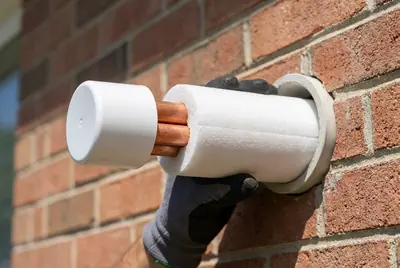
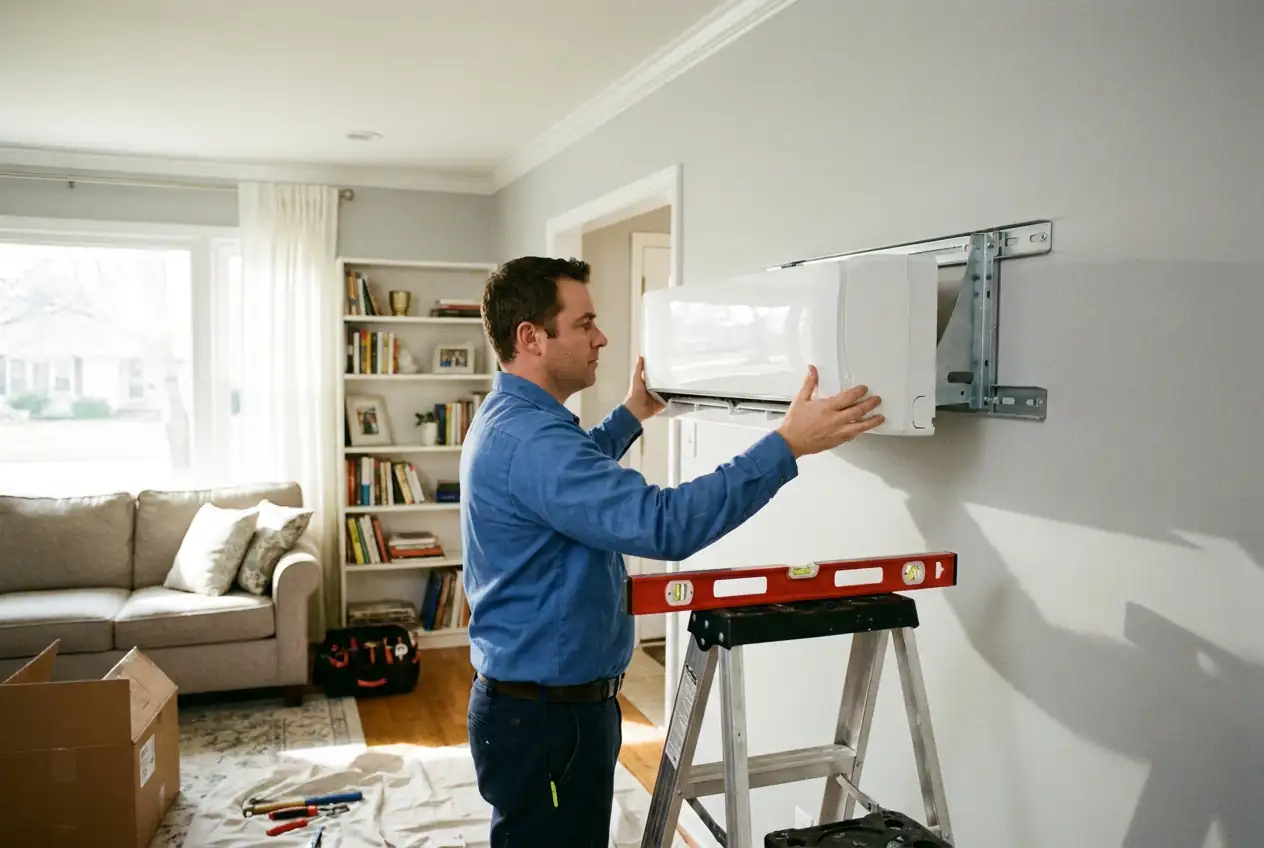
The indoor plate goes on studs or proper anchors, leveled twice, high enough to throw air across the room instead of down your neck. Outside, the condenser sits on a pad or stand-offs with clearance to breathe. The two meet through one small sleeved hole, pitched slightly outward so condensate drains away from the house instead of into it.

Commission it: mini split installation stage

Stage 3

Commission it

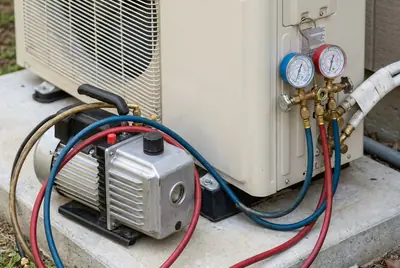
Flare joints are torqued to the value stamped in the manual, then the lineset is pressure tested and pulled down to a deep vacuum. Only when the gauge holds do we release refrigerant, and only in the weighed amount the run length calls for. Then we run it hot, run it cold, and show you both before packing the van.

One zone or multi zone

The honest answer changes house by house. Here is the trade in one table, including the case nobody advertises: two singles sometimes beat one multi.

The questionSingle zoneMulti zone
What hangs outsideOne compact condenser for one roomOne larger condenser carrying two to eight rooms
Refrigerant runsA single short lineset, simple and cheap to routeSeveral runs snaking to different walls, planned like plumbing
If a compressor failsThat room loses comfort, the rest of the house never noticesEvery connected room waits on the same repair
Running two roomsTwo singles can be cheaper than one multi and fail separatelyOne multi saves outdoor space and one electrical circuit
Efficiency habitsTuned for its one room, sips power at part loadLoses a little efficiency when only one small head calls
Adding on laterJust buy another single when the addition is builtPorts are fixed at purchase, so spares must be planned ahead

When two rooms sit at opposite ends of the house, quoting two singles against one multi takes us ten extra minutes and often saves you real money. We price both and let the arithmetic pick.

The work you are actually paying for

Wall plates set level

Wall plates set level

Anchored into framing, checked with a level twice, because a head that tilts drips condensate down your paint.

Linesets flared by hand

Linesets flared by hand

Copper cut square, deburred, flared and torqued to spec. The joint you never see again is the one we fuss over most.

Condensers that can breathe

Condensers that can breathe

Pad or stand-offs, snow legs where winter asks, and clearance on every side so the fan is not chewing its own exhaust.

Vacuum pulled, then proven

Vacuum pulled, then proven

The pump runs until the gauge reads deep and stays there with the pump off. Moisture never gets a seat in the circuit.

A circuit of its own

A circuit of its own

Dedicated breaker, correctly sized wire, outdoor disconnect within sight of the unit. Wired to code, not to convenience.

Handover with the remote

Handover with the remote

Modes, schedules, filter care and the one habit that saves power: set it and leave it. Ten minutes that pay for years.

Why the vacuum pump matters

Between the copper being opened to the air and the refrigerant being released, the lineset holds ordinary room air, and room air always carries water. Water is the one passenger a refrigeration circuit cannot forgive. Mixed with refrigerant and oil it forms acids that eat the compressor from the inside, quietly, over two or three summers, long after the installer's van has left the street.

The cure is not a gadget, it is patience. A vacuum pump pulls the lines down until the air, and more stubbornly the moisture clinging to the pipe walls, has boiled away. We watch the gauge fall, valve the pump off, and wait. If the reading creeps back up, something is still wet or something leaks, and either way the system is not ready. Skipping that wait saves half an hour on install day and costs a compressor five years on.

Charge is the same discipline in a different unit. Refrigerant is not poured to a feeling; the correct amount depends on the length of the run and is measured on a scale, gram by gram. Too little and the system strains on cold mornings. Too much and pressures climb while efficiency slides. The scale and the gauge are cheap instruments, which is exactly why we trust installs that use them and doubt the ones that do not.

From first message to first cool evening

  1. Write in

    ZIP, the rooms giving you trouble, who you are and where to call. Half a minute, and the clock starts.

  2. One call back

    An installer, not a script, asks about walls, panel capacity and which rooms misbehave in which season.

  3. The walkthrough

    We measure the rooms, find the head positions and the condenser spot, and leave you a written figure that holds.

  4. Install day

    Bracket, hole, lineset, wiring, vacuum, charge. A single zone is usually running by that afternoon.

  5. Both seasons proven

    Before we go, the system heats and cools on command in front of you, and the paperwork lands in your hand.

What the installs come to

The lineUsual rangeWhat the number covers
Single zone, wall mounted, installed and commissioned$3,000 - $5,500Head, condenser, bracket, lineset, vacuum, charge and startup.
Each additional zone on a multi system$1,800 - $3,200Another head, its lineset and the commissioning that goes with it.
Dedicated circuit and outdoor disconnect$450 - $1,100Breaker, wire run and disconnect, priced with your panel in mind.
Condenser on wall stand-offs instead of a ground pad$150 - $420Worth it where snow drifts, floods or lot lines argue with a pad.
Removing old window units and closing the openings$140 - $380Haul away included; your windows seal and lock again.
Smallest install we scheduleabout $2,600Below that, an honest repair or a window unit serves you better.

Lineset length, wall construction and your electrical panel move these numbers, which is why the walkthrough comes before the figure. The written quote itself costs nothing.

The finish is part of the engineering

A mini split earns its keep for fifteen years, so the half day it takes to fit one should not leave scars. The wall penetration is drilled once, sleeved, pitched and sealed against weather and insects, with a drop cloth under it and a vacuum run over the dust before we straighten the furniture. Outside, the lineset does not dangle down your siding like forgotten cable: it travels inside a slim cover, run plumb and square, in a shade that sits quietly against the house.

Commissioning ends with a demonstration, not a wave from the driveway. You watch the system pull the room down in cooling, then flip to heating and feel the coil come up warm. Condensate gets a poured glass of water through the drain line while you watch it exit where it should. If any of that misbehaves in the first season, the crew that installed it returns under the workmanship terms printed on your quote, and the visit costs conversation, not money.

Questions we field at kitchen tables

What size does my room actually need?

Rough arithmetic says 20 to 30 BTU per square foot, but sun, insulation, ceiling height and how many bodies use the room all bend that number. The walkthrough pins it down per room. Bigger is not safer: an oversized head cycles instead of dehumidifying, and the room feels clammy at the right temperature.

Can one system heat and cool the whole house?

A multi zone with three to five well placed heads covers most single family layouts, and hallways borrow from the rooms around them. Very large or very chopped up houses sometimes do better with two smaller systems on opposite ends, which we will say plainly when the math points that way.

Do mini splits really heat in winter?

Cold climate models hold useful output far below zero, and the walkthrough checks your design temperature before we promise anything. In the harshest snaps a fireplace or baseboard backup earns its keep, the same way it would beside any heat pump.

How invasive is the installation?

One sleeved hole about three inches wide per indoor head, a bracket on studs, and a lineset cover outside. No ducts, no ceilings opened, no plaster repair. A single zone that starts at breakfast is usually cooling by mid afternoon.

Will my electrical panel need work?

Each system wants its own circuit and an outdoor disconnect. Panels with a free slot take that in stride; crowded ones may need a tandem breaker or, rarely, an upgrade. We look at the panel during the walkthrough so the quote already contains the answer.

Where on the wall should the head go?

High, on a wall that lets the air wash the length of the room, away from bed headboards and door swings, with a clean drain path outside. Placement is comfort engineering, not decoration, and it is decided standing in the room with you.

Vans and vacuum pumps, coast to coast

Design temperatures change with the map; torque values and commissioning habits do not. Find your part of the country below.

Wall by wall across the Northeast

Wall by wall across the Midwest

Wall by wall across the South

Wall by wall across the West

One vacuum gauge, fifty major cities

The room you avoid every summer is one bracket away from being your favorite.

Start my written quote